
Nathen Amin.
Author. Historian
Heritage Consultant
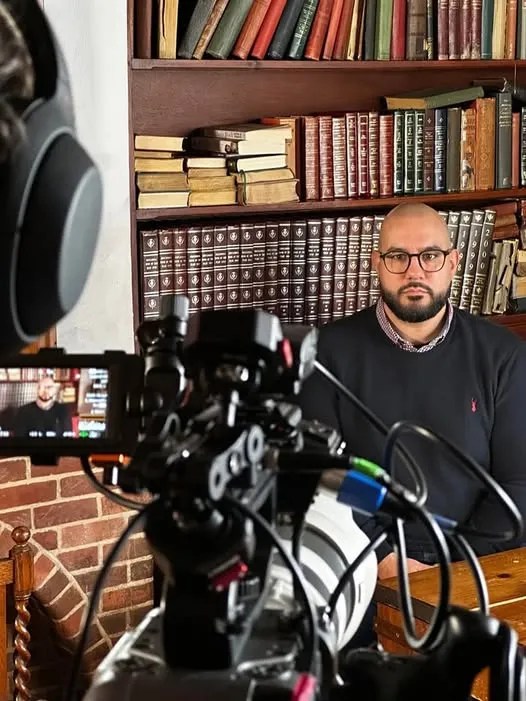
Nathen Amin is an author and Fellow of the Royal Historical Society from Carmarthenshire, West Wales, who focuses on the 15th Century and the reign of Henry VII. He has written five non-fiction history books; ‘Tudor Wales’ (2014), ‘York Pubs’ (2016). ‘The House of Beaufort: The Bastard Line that Captured the Throne’ (2017), ‘Henry VII and the Tudor Pretenders: Simnel, Warbeck and Warwick’ (2021) and ‘Son of Prophecy: The Rise of Henry Tudor‘ (2024), which was named a BBC History Book of the Year. He also contributed the essay on Henry VII to ‘Kings & Queens: 1200 Years of English and British Monarchs’ (2023).
Nathen is an experienced public speaker, having presented more than one hundred lectures to societies, museums and book festivals across the UK, including BBC History Weekend, Windsor Castle, HistFest, Southwark History Festival, Warwick Words, British Museum, Gloucester History Festival, Cirencester History Festival, Alison Weir Tours, Lichfield Literature Festival, Oundle Festival of Literature, Lancaster Historical Writing Festival, Bosworth Medieval Festival, and Barnet Medieval Festival.
He has also featured on British, Australian and German radio and television speaking about history, as well as in print and online media throughout the UK. In 2020 he was a founding member of the Henry Tudor Trust and in 2024 served as a book judge for the Historical Writers’ Association.
Son of Prophecy: The Rise of Henry Tudor (2024)
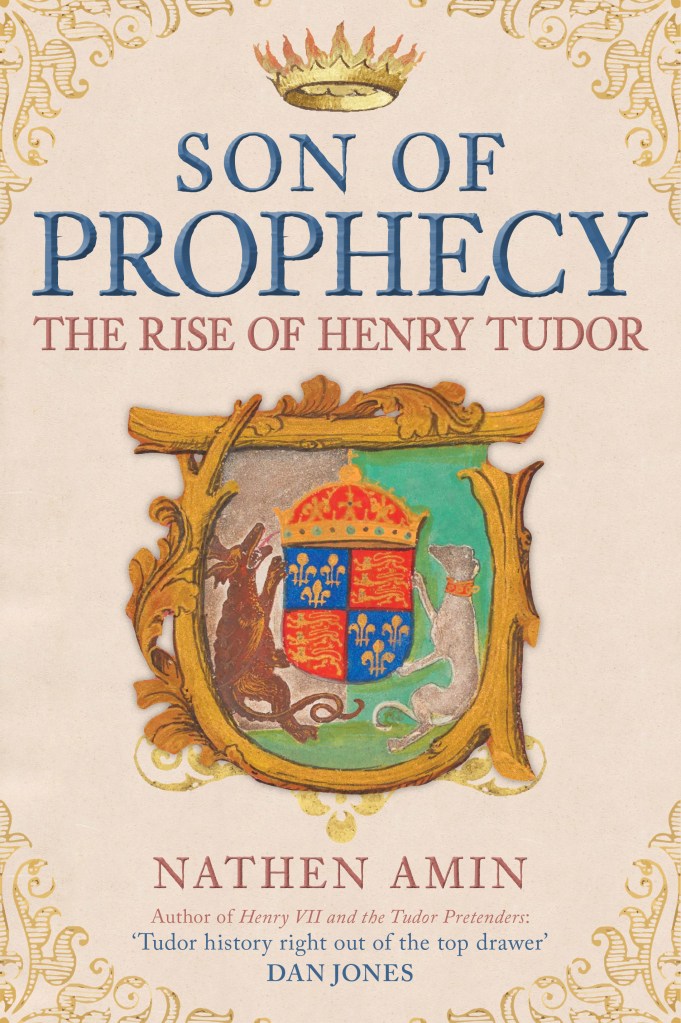
As England’s most celebrated royal dynasty, it’s often overlooked that the Tudors have their origins in rural Wales, far from the urban centres of English power where they dared to become great. When Henry Tudor won the English crown by defeating Richard III in battle, he was a stranger to the people he now ruled, an ‘unknown Welshman’ in the words of his defeated foe. In his native Wales, however, Henry had long been championed as the Son of Prophecy, a foretold national messiah who would free his oppressed people from their lengthy misery. How had this remarkable situation come about?
In this lucid and riveting account, Nathen Amin deftly explores how one redoubtable Welsh family thrived during lean years of political chaos, national instability, and intergenerational bloodshed to leave behind a complex legacy that changed the face of England and Wales forever. It is a passionately told tale of treachery, cunning, love, and heartbreak. From Penmynydd to Bosworth, this is the enthralling, action-packed story of the Tudors, but not as you know it.
Henry VII and the Tudor Pretenders: Simnel, Warbeck and Warwick (2021)
On 22 August 1485, Henry Tudor emerged from the Battle of Bosworth victorious. His disparate army vanquished the forces of Richard III and, according to Shakespeare over a century later, brought ‘smooth-faced peace, with smiling aplenty and fair prosperous days’ back to England. Yet, all was not well early in the Tudor reign. Despite later attempts to portray Henry VII as single-handedly uniting a war-torn England after three decades of conflict, the kingdom was anything but settled. Nor could it be after a tumultuous two-year period that had witnessed the untimely death of one king, the mysterious disappearance of another, and the brutal slaughter of a third on the battlefield.
For the first time in one compelling and comprehensive account, Nathen Amin looks at the myriad of shadowy conspiracies and murky plots which sought to depose the Tudor usurper early in his reign, with particular emphasis on the three pretenders whose causes were fervently advanced by Yorkist dissidents ‒ Lambert Simnel, Perkin Warbeck, and Edward, Earl of Warwick. Just how close did the Tudors come to overthrow long before the myth of their greatness had taken hold on our public consciousness?

The House of Beaufort: The Bastard Line that Captured the Crown (2017)

“The Wars of the Roses were a tumultuous period in English history, with family fighting family for the greatest prize in the kingdom – the throne of England. But what gave the eventual victor, Henry Tudor, the right to claim the throne? What made his mother the great heiress of medieval England? And how could an illegitimate line come to challenge the English monarchy?
This book will uncover the rise of the Beauforts from bastard stock of John of Gaunt, Duke of Lancaster, to respected companions of their cousin Henry V, celebrated victor of Agincourt. The Beauforts fell with the House of Lancaster during the 1460s and 1470s, and their hopes and fortunes came to rest upon the shoulders of a teenage widow named Margaret and her young son, Henry. From her would rise the House of Tudor, the most famous of all England’s royal houses and a dynasty who owed their crown to their forebears, the House of Beaufort. From bastards to princes, the Beauforts are medieval England’s most intriguing family.”
York Pubs (2016)
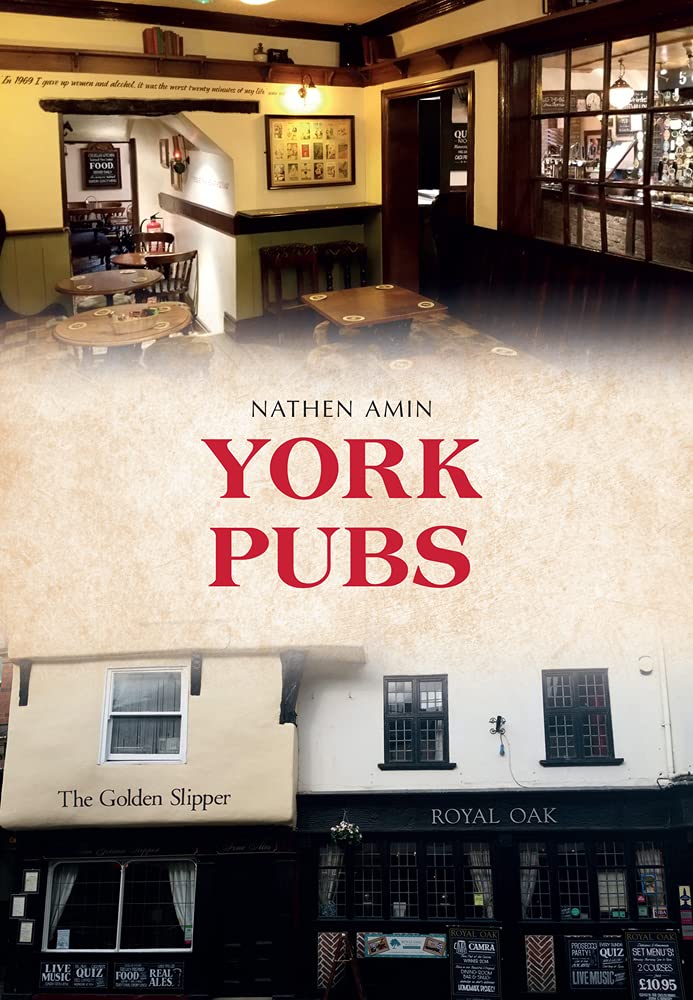
York is the second-most visited city in the UK, attracting millions of visitors from all across the world who are spellbound by the city’s medieval churches, quaint snickelways and its plentiful pubs. In 1663 it was recorded that York had 263 licensed public houses. As the population of York increased, so did the number of licensed pubs. Seebohm Rowntree’s early twentieth-century survey revealed that York had one licensed establishment for every 230 people.
The pubs that have survived into the modern era each have their own individual story to tell, a tale sure to entertain and fascinate while you sit perched at the bar. This book catalogues the most intriguing capers from the city’s historic pubs and will give the reader an introduction to a fascinating alehouse-based history of York.
Tudor Wales (2014)

The Tudors are one of history’s most infamous families and the era over which they reigned still captures the public’s interest without rival. ‘Tudor England’ in itself has become a well known phrase that covers many aspects of the era, particularly architecture, arts and the lifestyle. What is often overlooked however is that the Tudors, whilst coming to encompass all that is considered great about England, were a Welsh dynasty with their roots firmly entrenched in the hills across Offa’s Dyke.
This guide will take you on a journey throughout the beautiful country of Wales and expose the reader to the hidden gems of the Tudor era, from Harlech Castle in the north to Pembroke Castle in the west, and from the holy Bishop’s Palace at Lamphey to the sacred Cathedral at St David’s. From Dale, Carew and Penmynydd to Raglan, Conwy and Denbigh, every part of W ales has Tudor links, both to the royal Tudors and their more obscure Welsh ancestors. This guide will put you on the path to a true Tudor experience in the Land of their Fathers.
Contact
If you wish to contact myself for any reason, you can reach me below:


 Home
Home 